LIFTbuild fast-tracks high-rise construction
LIFTbuild is revolutionizing high-rise construction by assembling entire floors at ground level and lifting them into place, building from the top down. By applying manufacturing principles to the entire project life cycle, LIFTbuild enhances safety, accelerates timelines, and creates greater project certainty.


LIFTbuild’s innovative approach to high-rise construction ensures predictable timelines by streamlining sequencing and reducing on-site delays.

Modeled on the ingenuity of the Detroit assembly line, LIFTbuild’s manufacturing approach provides opportunities to capitalize on standardization from design through construction.
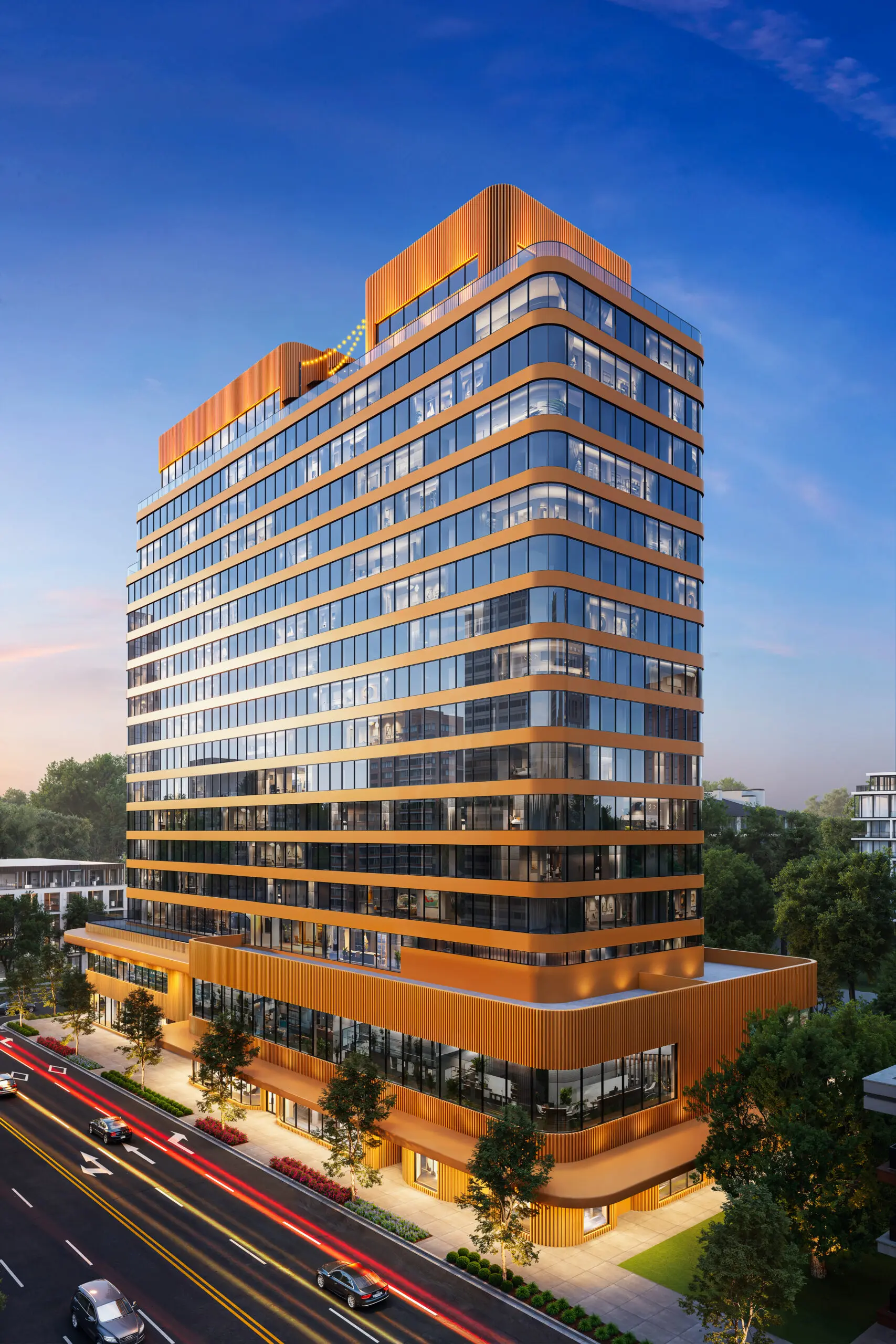
Our generative design process enhances the use of space and offers opportunities for aspirational concepts to become a reality. With LIFTbuild's expansive column-free floor plate, design possibilities are endless.
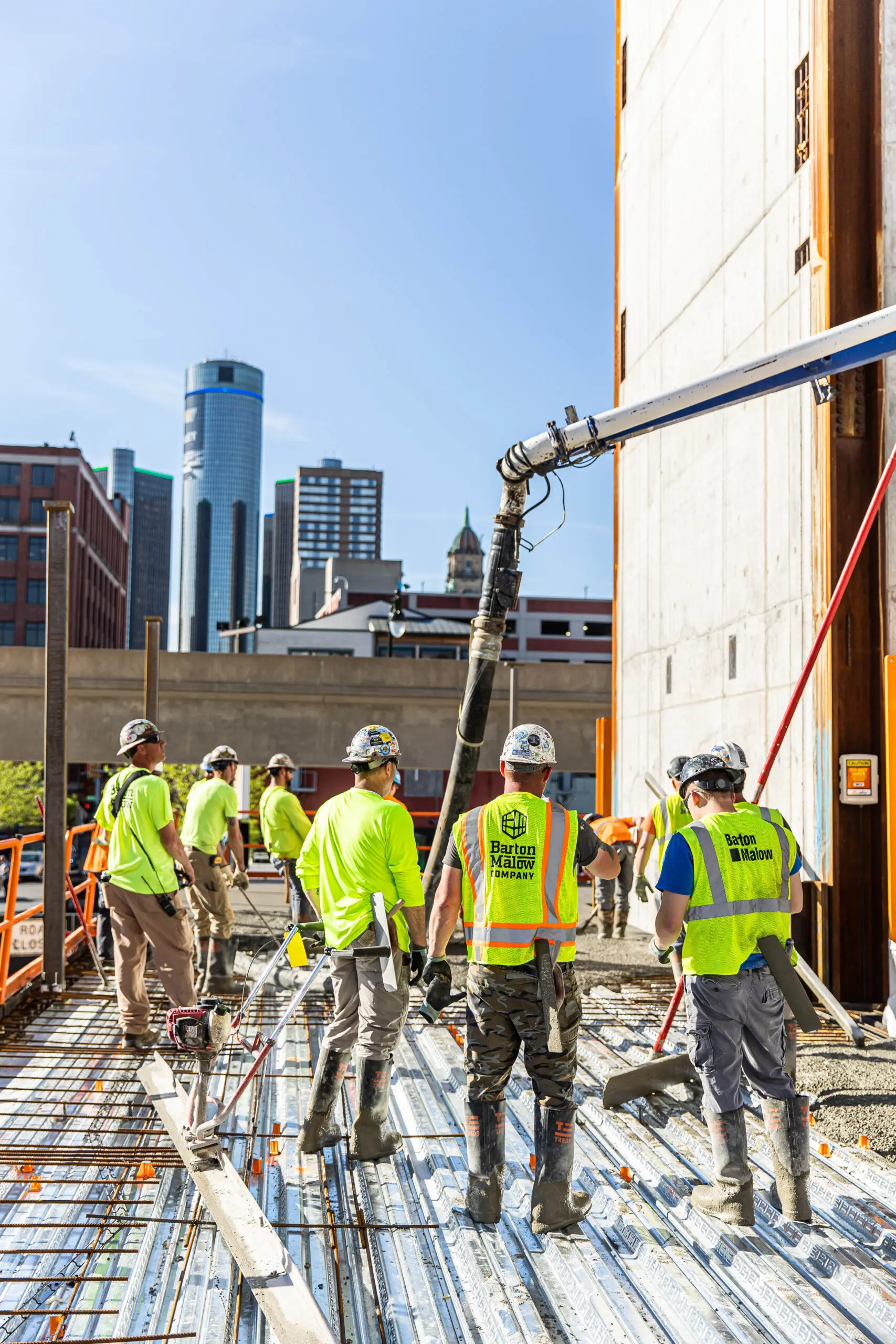
Our assembly process happens at a safe and ergonomic height, just above grade on the assembly pad. This results in a dramatically safer work environment with the elimination of critical hoisting, no risk of materials falling from heights, and a significant reduction in the need for fall protection.
LIFTbuild buildings are manufactured, not constructed
During Production, the meticulous planning of material delivery and unique assembly process comes to life in a controlled work environment, creating a literal assembly line of repeatable activities.

FIT-OUT
Once a floor plate is locked into the final position, it is weather-tight. MEP systems are connected, and interior fit-out continues with unitized framing installation. Drywall, ceilings, and lighting are put in place, followed by cabinets and fixtures. Finish carpentry elements and tile are installed; then, paint, floors, and doors/hardware complete the process. All fit-out takes place in an environmentally controlled, fall-safe space as the floors below continue to be assembled and lifted into position.

Structure
The LIFTbuild structure consists of one or more structural spines from which the roof and floors extend in a traditional cantilever arrangement. They are stand-alone structures with high lateral stability. After the structural concrete goes vertical, a concrete “assembly pad” is poured on the ground to provide a safe and efficient work surface for the floor plate assembly. The floor plate structure – steel or post-tension concrete – is assembled at a safe, ergonomic, and easy-to-supervise height of 3-8 feet above grade.

SYSTEMS
Below-deck assembly begins with spray fireproofing directly overhead. Ground-level work allows for a safer work platform with fewer ladders, scaffolds, and hoses. Sprinkler lines and mechanical, electrical, and plumbing (MEP) systems are installed, followed by preliminary testing and sign-off. Prefabricated MEP systems take full advantage of LIFTbuild's column-free interior, which results in a simpler design and execution.
FACADE
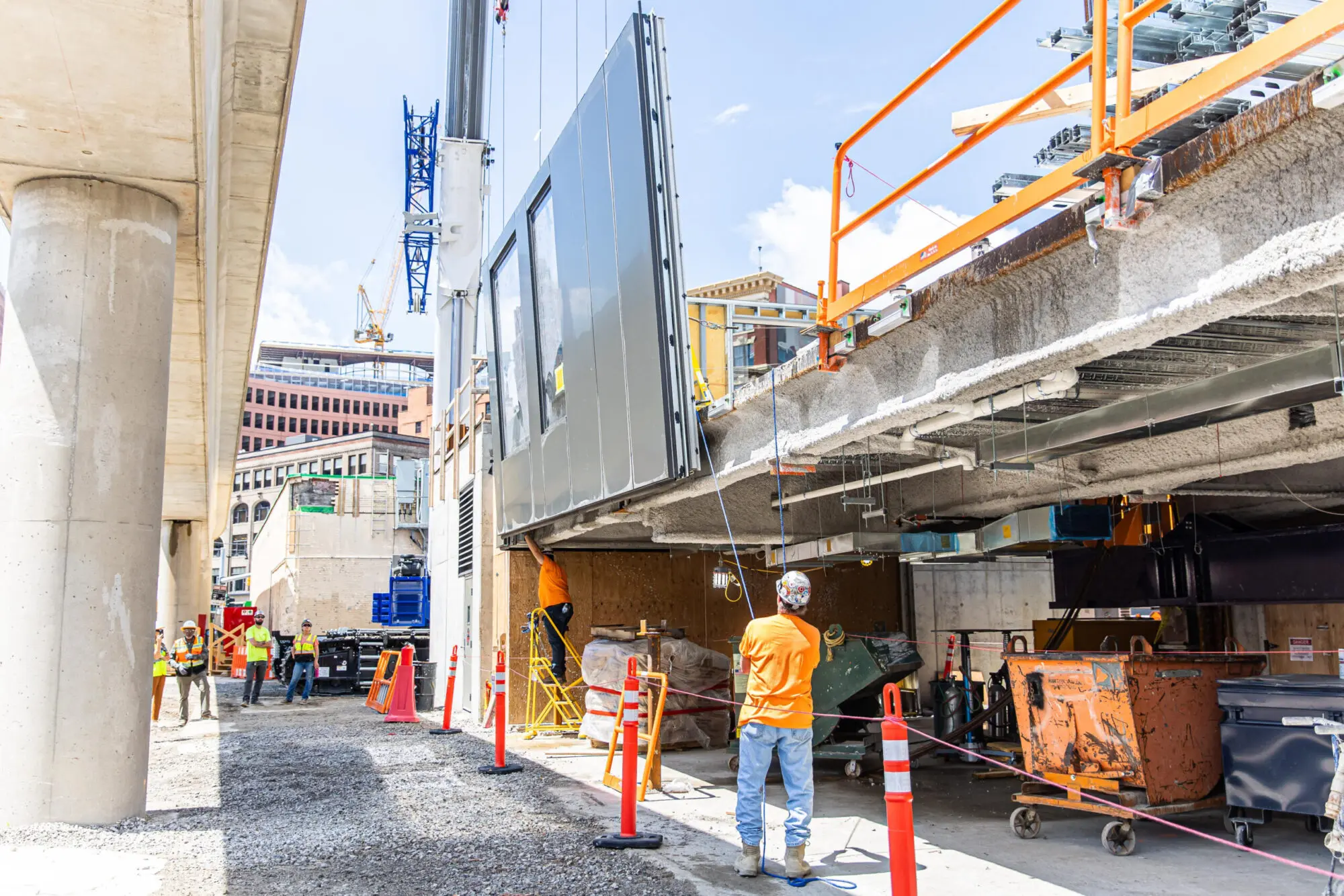
While the work is in progress underneath, the façade is installed around the perimeter of the floor plate with a small support crane, one panel at a time.
LOADING
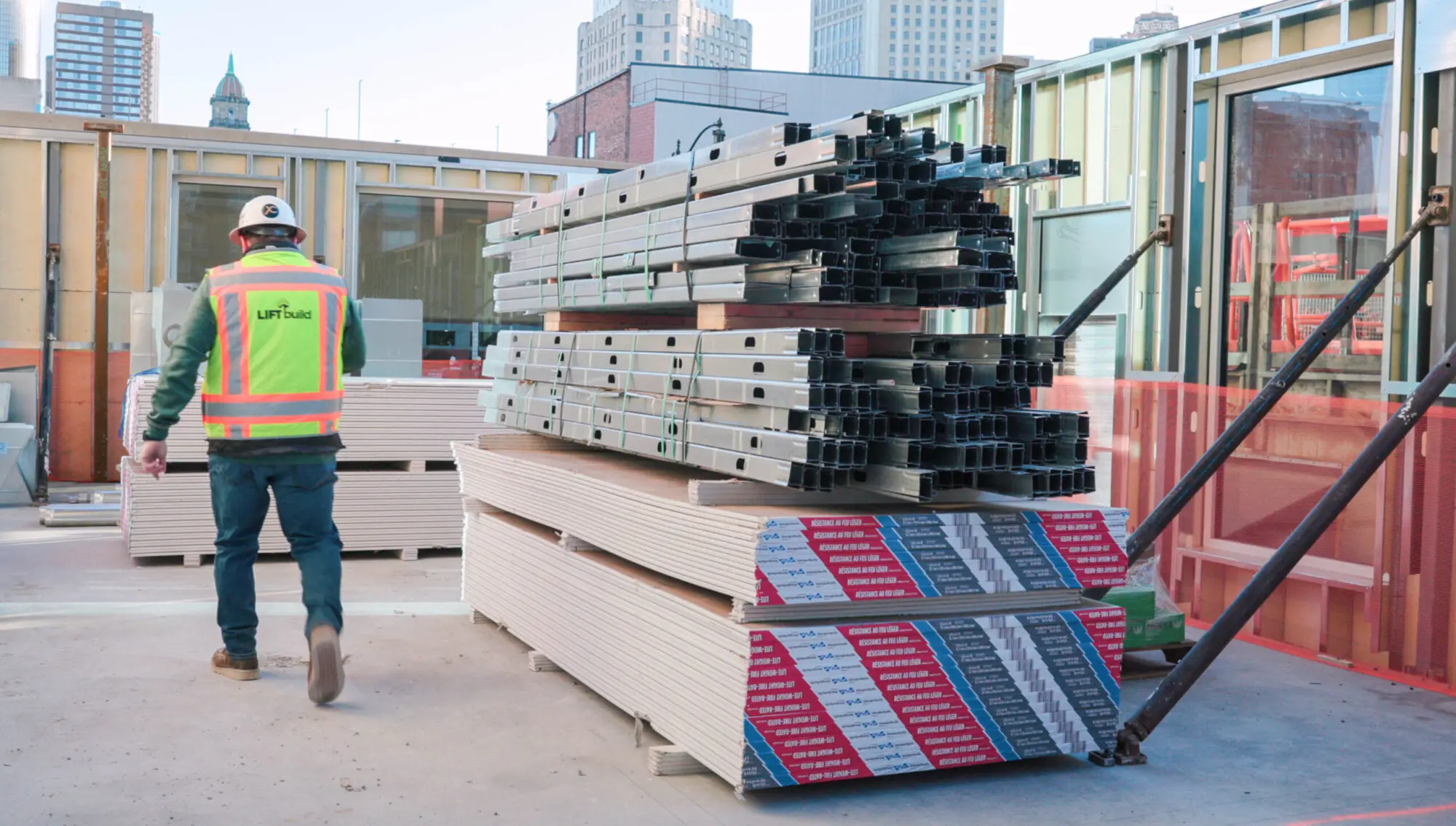
As the façade is installed, kitted materials are loaded onto the floor plate per the load plan. Materials and prefabricated units can include studs, drywall, doors, hardware, and pre-assembled sub-assemblies or pods. As the façade encloses the floor perimeter, security and safety checks are performed above the deck, and final sign-off for lifting operations occurs.
LIFTING
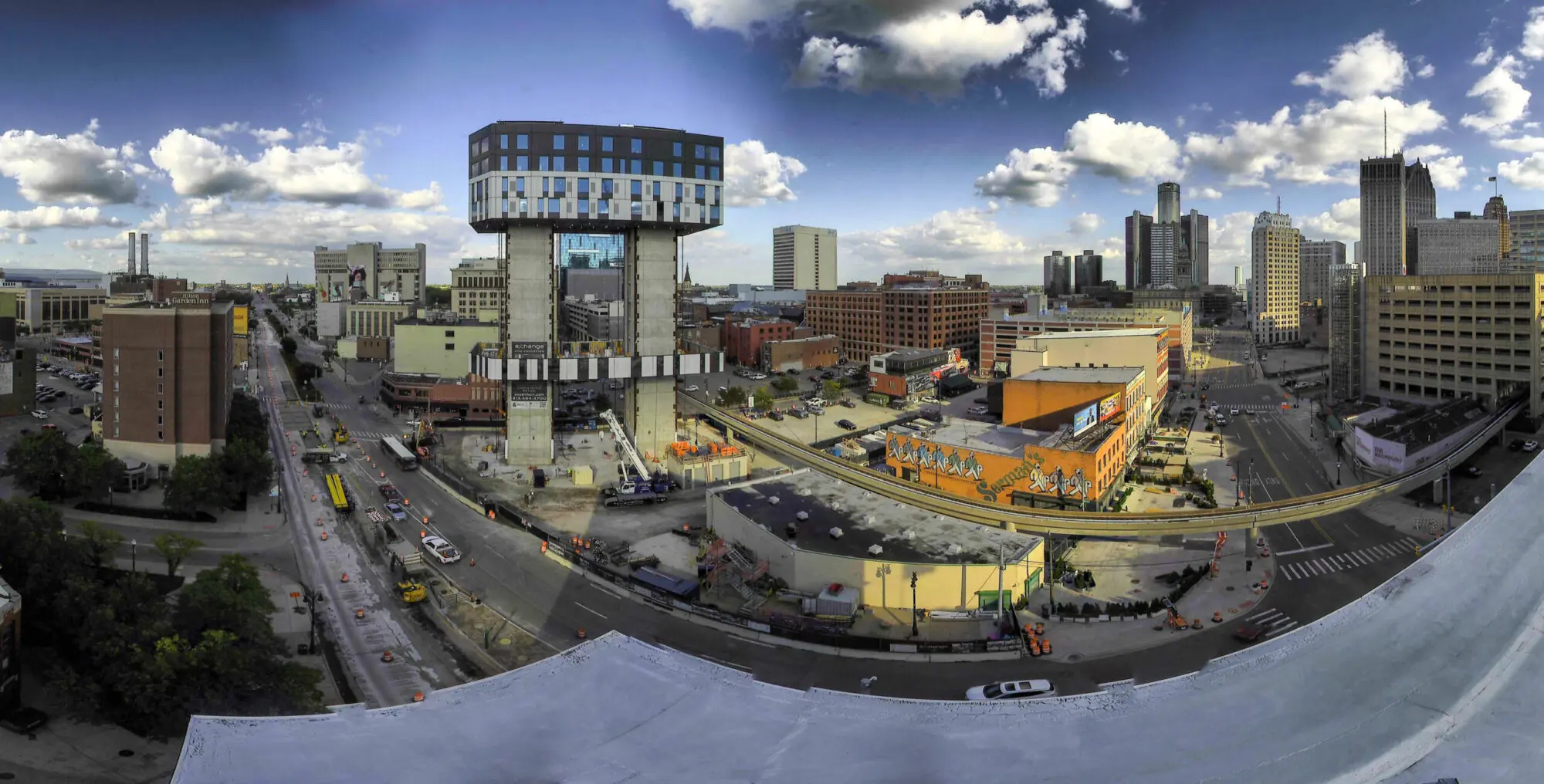
The floor plate is lifted from a central controller at an average of 20-30 feet per hour. The controller monitors and adjusts the level of the assembly. The floor plate is stopped slightly before its final position to check alignment. The lift continues to the final position and the final lock-in is executed. At this point, the layout and assembly of the next floor plate can begin.